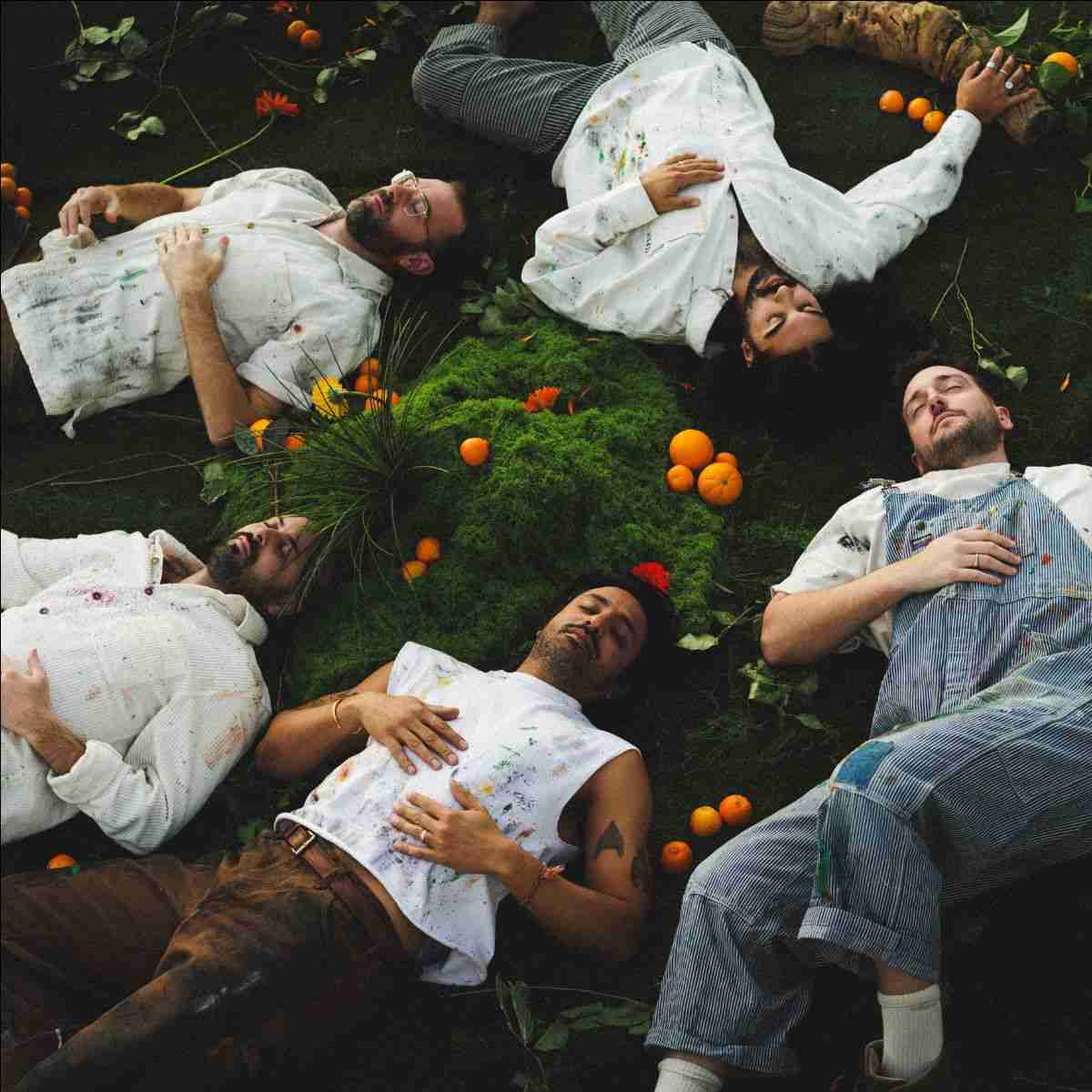
- Your new album Victory Garden is out now — how does it feel to finally share it after everything that’s gone into it?
- Eric Cannata: I feel a sense of catharsis, we put so much into the record, so much love. It feels right to us, this record in its entirety. There’s also a part of me, and this happens every time we put out a new record, that feels a sense of vulnerability. The goal, I think, is trying to put out a record and have a calm nervous system throughout. That’s the practice that we’re trying to do for this particular record, and get better at that as we put out records. We’re extremely excited to perform these songs and meet people on the road and see people sing along. It’s a record that we’re really, really proud of and it just feels like a rebirth for us as a band.
- You’ve been a band for over 20 years now — how does Victory Garden reflect where you are creatively at this point in your journey?
- Sameer Gadhia: I think we’re at a place where our instincts and our experience are kind of at the same place. We’ve gone full circle in a lot of ways in how we record the music, but we’ve gained a lot of experience and trust in our instinct over the time that we’ve been a band too. It feels like it’s the most exciting time to be making music for us.
- In a few words, what is Victory Garden about?
- Eric: Victory Garden is our ode to radical empathy, and it’s our attempt to view the world through the eyes of children and get back to our humanity, get back to our brotherhood. And also an attempt to come together in community in trying to have hope for a better future, and to take action towards that future.
- You worked on the album during retreats in Idyllwild and Joshua Tree — did those environments influence the mood or direction of the record?
- Sameer: I think being able to maroon ourselves out in the wilderness in two very different places naturally in itself created the sound of this record, and definitely some of the landscape made its way into some of the lyrics. There’s this place, kind of a meditative, full creative flow state, and that always works when you’re out of the big city. That’s definitely a big part of the record. And also, the studios that we were in were both somehow indoors and outdoors, we were able to write all over the property.
- How does Victory Garden differ from American Bollywood in terms of themes and approach?
- Eric: American Bollywood was very much a COVID baby that came to life after Sameer brought us the song American Bollywood. It sparked this huge interest and influx of inspiration to explore and celebrate Sameer’s culture as an Indian American. It was an incredible journey of exploring the mix of Western and Eastern influences in music and in lyrics and in concepts. That was an incredible journey, and I think that by nature, COVID made it hard for us to all be together and to write and record all in the same room. So it was a bit of a puzzle in that way, and I’m so incredibly proud of that record. I think it marks a huge milestone for us as our fifth record, and I think it’s absolutely some of our best work. With Victory Garden and our difference in approach, it was the huge desire for the band to get together in a room and be all together from start to finish and record as much of it live as possible. It was a record of almost returning to the roots of how we did our first record, except five albums later when we’re so much more experienced and have so much life under our belts. All the other guys have young children too, so it was also about really getting back to that, viewing the world from how we were when we lived together when we were teenagers, but taking the experience we have as adults now to really get to the root of where we’re at as people and as a band.
- The album centres on “radical empathy” — what does that idea mean to you personally and as a band?
- Sameer: For me, radical empathy is one of those things that you chew on. It’s for the people as a whole and to others, but then also within yourself, to have empathy for yourself when you’re going through a difficult time. Empathy is the thing that moves things forward. And for us, it’s being able to know others and see everyone as kind of one thing. I know it sounds kind of spiritual, but there is no separation between you and me and we’re all in this together. That is the thing that continues to resonate with me.
- Eric: It is a bit of a spiritual thing. For me, I feel like we’re in such a polarising time, and I think that having empathy for all is really difficult. But there’s so much anger and vitriol online, and everywhere you look, there’s just so much bad news. I think that this idea of radical empathy is attempting to have empathy for all, and love for all, and love for yourself, as Sameer mentioned, so we can move forward and figure out how to build a better future together. Because without that, if we’re just adding more vitriol, if we’re just adding more anger, it’s not necessarily moving things forward.
- Do you have a favourite track on the album right now?
- Sameer: Right now I’d probably say Are You With Me? is a favourite. It’s a track that’s towards the end of the record that really came together in the studio, and it’s kind of hidden in the track list. Victory Garden works really well organically as a whole record, but Are You With Me? is definitely a song that is worth a re-listen.
- Eric: Yeah, I love Are You With Me?, I love the entire record. I also really love Ships Passing. I think that it really tapped into a core emotion that we were discussing in the studio. Lyrically, it’s some of our best work, the verses especially really tap into something that feels so true and honest, but it also has a level of poetry and surrealism to it. So I’ll say Ships Passing.
- You were in Australia last year with Bloc Party — what stood out from that tour?
- Sameer: Overall we had so many great times in pretty much every city that we went to. But the general sense was also: wow, we do have people who know this band, we have a connection with them and we would like to foster that. And you never know until you go again, we hadn’t been over there in 10 years, so it was kind of like: “we’ll just see what happens”. And we were all pleasantly surprised by the connection that we had with longtime fans as well who had been wanting to see us for a while. We definitely intended to come back more often.
- Eric: As Sameer said, we hadn’t been to Australia in over a decade. And New Zealand too actually. But Australia is an incredible place, it’s an incredible country, continent. The food was incredible, the coffee was ridiculous, we just had an amazing time. Everything was amazing.
- Sameer: The bathrooms!
- Eric: The infrastructure as well, let’s talk about the airport! The wildlife too, going to the Perth zoo, seeing a quokka, and seeing a kangaroo! We didn’t go to the quokka island, we went to the zoo in Perth but they had quokkas there. We didn’t get to hold them or anything though. We saw one, it was kind of hidden, but just being there was so much fun. We were in Sydney for the first four days, it was raining the entire time…and it was a blast! The first time we went over there, I was so young and it was just not the same experience. This most recent time, I just realised how much I absolutely love the culture, the food, everything.
- How would you describe your sound in food form, and why?
- Sameer: Damn, I think it has to be some sort of buffet, something with lots of accoutrements. Maybe tapas? I think tapas.
- Eric: Yeah, that’s got a little bit of everything!
- Sameer: Yeah, because we’ve got little things from all over the place. When you bring five people together musically as human beings, and even just where we’re from culturally, you get an assortment of different flavours. Fusion tapas!
- Eric: Fusion tapas is perfect, that sounds great. Two stars out of five on Yelp (laughs). Intercontinental fusion tapas.
- Sameer: An intercontinental buffet, that’s actually perfect.
- What’s your scene?
- Sameer: We’re part of the world that believes in hope and humanity. It doesn’t make sense to just be cynical about everything and be a part of the problem. I think at this point I’ve just lost touch with people who have lost that hope. We’re trying to bring that hope back, and hopefully we can get different shades every day, help people find some hope. And maybe it’s not their stasis when they move through life, but trying to be positive and not jaded.
- Eric: It’s so easy to be jaded these days, and apathetic and overwhelmed. We still believe in hope.
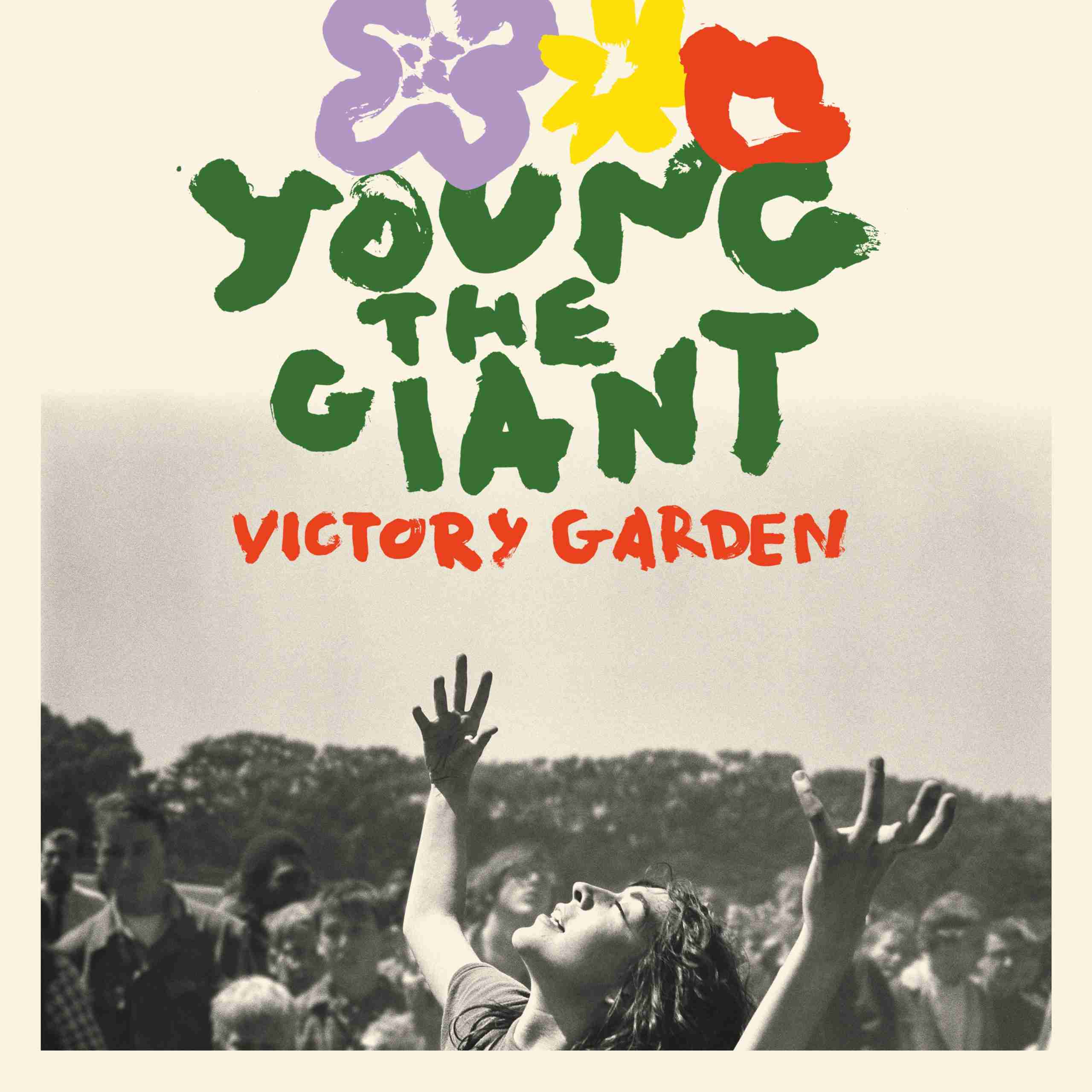
More than two decades on from their early beginnings in Southern California, Young the Giant continue to evolve — and with Victory Garden, they’ve delivered one of their most cohesive and reflective releases to date.
Out now via Fearless Records, the band’s sixth studio album arrives at a point where many acts might look backward. Instead, Victory Garden looks outward — grounded in what the band have described as an “ode to radical empathy,” and shaped by a deeper awareness of connection, community, and perspective.
Across their 20+ year journey — from their early days as The Jakes through to the breakout success of their self-titled debut and defining tracks like “Cough Syrup” and “My Body” — Young the Giant have consistently reshaped their sound. Each album has marked a distinct era, from the polished alternative rock of Mind Over Matter through to the expansive, concept-driven American Bollywood, which explored identity, heritage, and personal history.
With Victory Garden, that focus shifts.
Where American Bollywood was deeply introspective, Victory Garden moves toward something more collective — exploring themes of life, love, fear, and the quiet tension between them. It’s an album informed not only by experience, but by perspective, particularly the band’s reflections on the world through the eyes of their children.
Sonically, the album feels both refined and organic. Written and recorded together as a full band in one room, it marks a return to a more unified creative process — one that leans into instinct, chemistry, and shared energy. That cohesion is elevated by producer Brendan O’Brien, whose subtle, experienced touch allows the band’s dynamic range to breathe without losing focus.
Tracks like “Already There” showcase the band’s melodic strength, while “Bitter Fruit” drifts into more textured, atmospheric territory — highlighting a balance between clarity and experimentation that has become a hallmark of their sound.
Importantly, Victory Garden doesn’t attempt to reinvent Young the Giant. Instead, it refines everything they’ve built — drawing from years of growth, change, and exploration, and distilling it into something more immediate and connected.
With Victory Garden, Young the Giant reconnects with the core experience of 100% band collaboration, writing and recording together as a unit in one room. Written largely during writing retreats in Idyllwild and Joshua Tree and produced by Brendan O’Brien (Springsteen, Pearl Jam, Soundgarden) at Henson Studios in Hollywood, Victory Garden is a cohesive album experience that both inspires and enthralls. Lyrically, the album is rooted in radical empathy, capturing the band’s songwriting instincts at its most immediate and heartfelt. Musically, Victory Garden showcases the seasoned artists’ collective performances at their intuitive height. The result is a prolific record that beckons a new season of creative fertility for the band and presents Young the Giant as confident, refined, and fully inhabiting its voice.
Following their return to Australian stages in 2025 alongside Bloc Party, the band step into 2026 with renewed purpose. If Victory Garden signals anything, it’s that even after two decades, Young the Giant are still moving forward — not just as musicians, but as a collective voice shaped by time, experience, and an ongoing desire to connect.
And in a world that increasingly feels divided, that might be exactly what’s needed.
Grab your copy here